

Jak często należy czyścić palniki gazowe?
Odpowiedni harmonogram sprzątania zależy od tego, jak często gotujesz i jak często dochodzi do rozlewania jedzenia.
Przetarcie płyty kuchennej po gotowaniu pomaga zapobiegać osadzaniu się, a głębsze czyszczenie można przeprowadzić, gdy palniki zaczynają wyglądać na tłuste lub zmienia się wydajność płomienia.
Jeśli gotujesz codziennie, regularne sprawdzanie palników znacznie ułatwia głębokie czyszczenie.
Dlaczego mój płomień gazowy jest nierówny?
Tłuszcz, resztki jedzenia, wilgoć lub nieprawidłowo umieszczone części palnika mogą przyczyniać się do nierównych płomieni.
Czyszczenie i prawidłowe zamontowanie pokrywy i głowicy palnika czasem może rozwiązać problem.
Jeśli płomień pozostaje słaby, nietypowo zabarwiony lub nierówny po czyszczeniu, zleć inspekcję urządzenia, zamiast wielokrotnie samodzielnie usuwać wewnętrzne elementy gazowe.
Czy mogę używać samego octu?
Ocet jest przydatny do rozluźniania niektórych rodzajów osadów i tłuszczu, ale połączenie moczenia z delikatnym szorowaniem sodą oczyszczoną może ułatwić usunięcie uporczywych osadów.
Zawsze dokładnie spłukuj po zabiegu.
Czy mogę wymieszać ocet i sodę oczyszczoną w misce?
Zazwyczaj bardziej praktyczne jest stosowanie ich osobno.
Use vinegar in the soaking solution first, then apply baking soda afterward for gentle scrubbing.
If they are mixed together immediately, they react and largely neutralize one another.
Can I Use Baking Powder Instead of Baking Soda?
No. Baking soda, also called bicarbonate of soda, is the appropriate cleaning ingredient here.
Baking powder contains additional ingredients intended for baking and is not the same product.
Should I Use a Metal Brush?
It is better to avoid harsh metal brushes unless your appliance manufacturer specifically recommends them.
An old toothbrush is usually sufficient for loosening residue without scratching delicate surfaces.
Can I Put Burner Parts in the Dishwasher?
That depends on the appliance.
Some burner caps or grates may be dishwasher-safe, while others may discolor, corrode, or become damaged.
Check the user manual before using a dishwasher.
Why Do the Burners Smell After Cooking?
Burnt grease or trapped food residue can create lingering odors when the stove heats up.
Cleaning the burner caps, grates, and surrounding surface can help remove the source of the smell.
How to Prevent Heavy Grease Buildup
The easiest way to keep burners clean is to deal with spills early.
Once the stovetop has cooled after cooking, wipe away fresh grease and food splashes before they have time to harden.
This reduces the amount of scrubbing needed during deep cleaning.
Use a Microfiber Cloth for Daily Cleaning
Microfiber cloths are useful because they can lift grease and crumbs without being overly abrasive.
Keep one specifically for kitchen surfaces and wash it regularly.
Do Not Clean a Hot Stove
Always wait for the stovetop and burner parts to cool before touching or cleaning them.
Cleaning hot components can cause burns and may also damage certain materials if cold liquid is applied suddenly.
Avoid Flooding the Ignition Area
When cleaning around built-in igniters, use a damp cloth rather than pouring water directly over the area.
Excess moisture can temporarily interfere with ignition.
What If the Igniter Keeps Clicking?
If the igniter clicks after cleaning, moisture may be present around the ignition area.
Turn the burner off and allow everything to dry thoroughly.
If clicking continues after the stove is dry and correctly assembled, consult the appliance manual or a qualified technician.
What If the Burner Will Not Light After Cleaning?
First check that the burner cap and head are seated correctly.
Make sure all parts are completely dry.
If the burner still does not ignite normally, stop using it and seek appropriate appliance service rather than attempting to dismantle gas components.
Frequently Asked Questions
How Long Should I Soak the Burners?
About 1 hour is a practical starting point for loosening greasy buildup.
Very dirty parts may need additional gentle cleaning afterward.
Can I Leave Them Soaking Overnight?
Long soaking is not necessary for most routine cleaning and may not be suitable for every burner material.
Follow the manufacturer’s care recommendations whenever available.
What Type of Vinegar Should I Use?
Plain white distilled vinegar is suitable.
There is no need to use specialty or expensive vinegar intended for cooking.
How Much Vinegar Do I Need?
This method uses approximately 50 ml, or about 3 tablespoons, mixed into enough hot water to cover the removable burner pieces.
Can I Use Lemon Juice Instead?
Lemon juice is acidic and is sometimes used for household cleaning, but this method specifically uses white distilled vinegar.
Do I Need Gloves?
Household gloves can be useful if you have sensitive skin or prefer to avoid prolonged contact with cleaning solutions.
Can I Clean the Stove Every Day?
A light wipe-down after cooking is useful, provided the stove has completely cooled.
A full soak-and-scrub cleaning is usually only necessary periodically.
How Do I Know the Burners Are Completely Dry?
They should feel dry on every visible surface, with no moisture remaining in grooves or recesses.
Allowing them additional air-drying time after wiping is a good precaution.
Can Dirty Burners Affect Cooking?
Yes. Heavy residue or blocked accessible openings can contribute to uneven heating or poor flame performance.
Regular cleaning helps keep the burner components functioning as intended.
Important Safety Reminder
Cleaning should be limited to removable and safely accessible parts described in your appliance manual.
Do not dismantle gas valves, gas lines, internal fittings, or other components that require professional servicing.
If you smell gas, cannot shut off a burner properly, or notice abnormal flame behavior that persists after correct cleaning and reassembly, stop using the appliance and seek qualified assistance.
Final Thoughts
Cleaning gas hob burners does not have to be a difficult job.
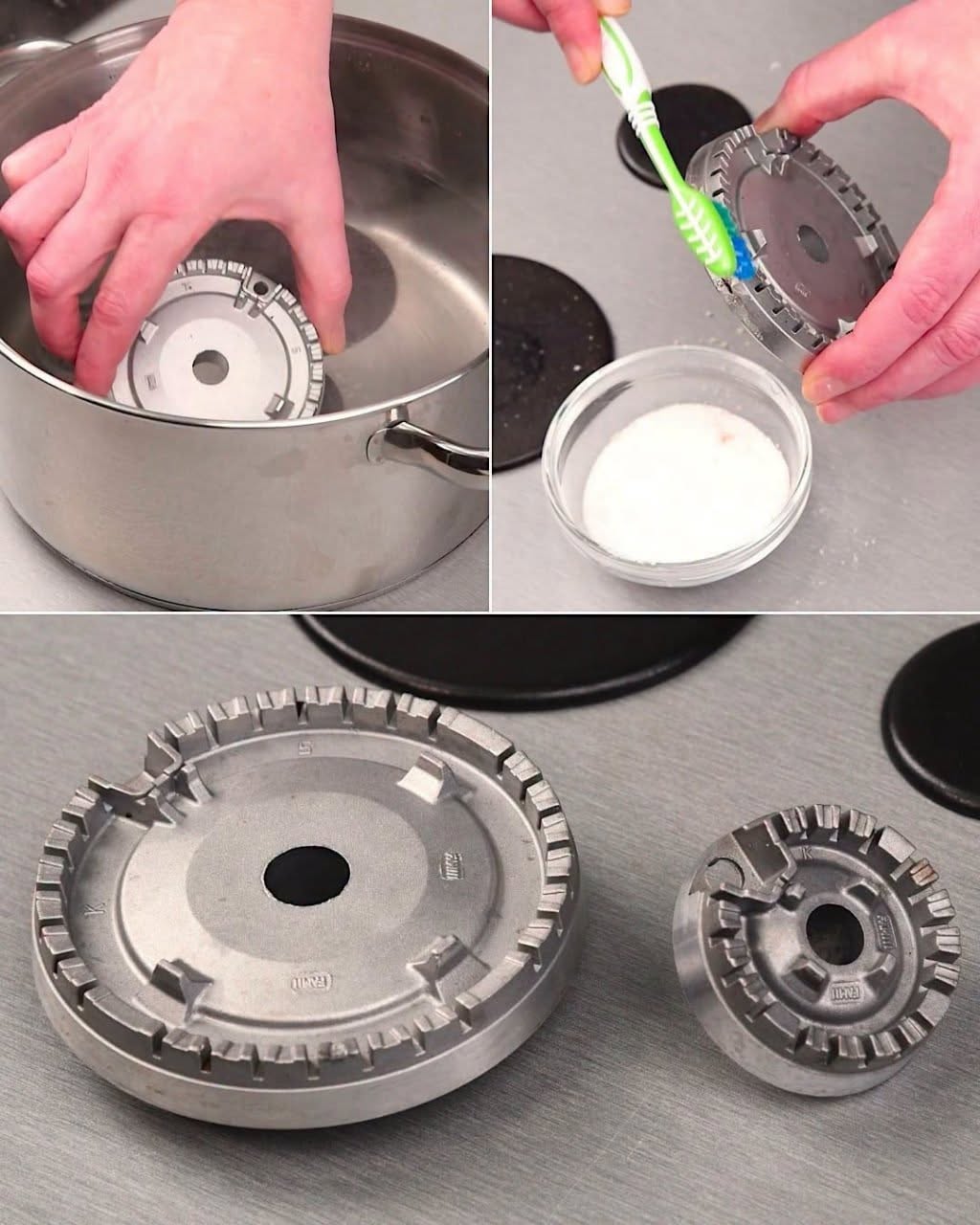
Proste moczenie w gorącej wodzie i białym occie może rozluźnić nagromadzony tłuszcz, podczas gdy soda oczyszczona i stara szczoteczka do zębów pomagają usunąć pozostałości.
Najważniejsze kroki to delikatne czyszczenie, unikanie uszkodzenia otworów palnika, dokładne płukanie i całkowite wysuszenie wszystkich elementów przed złożeniem kuchenki z powrotem.
Dzięki regularnej konserwacji i szybkiemu sprzątaniu po rozlaniu płyta może pozostać czystsza, pachnieć świeższe i nadal produkować bardziej stabilny płomień przy znacznie mniejszym wysiłku.